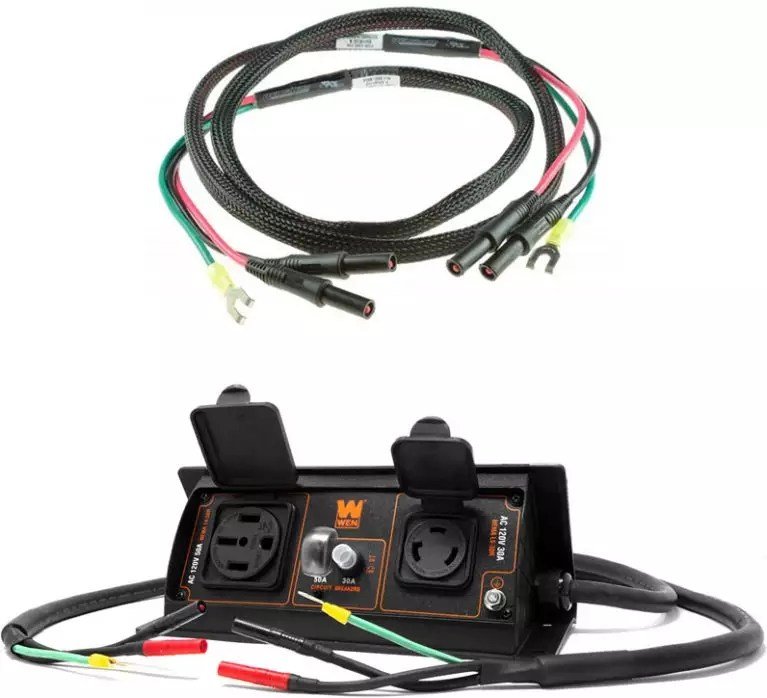
A portable generator is a powerhouse of peace of mind, a reliable backup for outages, and a vital companion for off-grid adventures or demanding job sites. But owning the generator itself is just the first step. To truly unlock its full potential, ensure maximum safety, and extend its lifespan, you need the right Essential Portable Generator Accessories & Setup. Without these crucial additions and a smart approach to preparation, even the best generator can fall short of your expectations.
Think of it this way: you wouldn't buy a high-performance car without considering the right tires, maintenance schedule, or even how to properly fuel it. Your generator deserves the same thoughtful consideration. From keeping it running smoothly to safely integrating it into your home, these accessories and setup practices are non-negotiable for anyone serious about reliable power.
At a Glance: Key Takeaways for Generator Owners
- Heavy-Duty Cords are a Must: Always use generator-specific, appropriately gauged extension cords for safety and efficient power delivery.
- Protection Prolongs Life: Invest in covers or enclosures to shield your generator from weather, dust, and potential theft.
- Seamless Home Power: A transfer switch is critical for safely connecting your generator to your home's electrical system during outages.
- Amplify Your Power: Parallel kits allow you to combine the output of two smaller generators, offering flexibility and increased wattage.
- Maintenance is Key: Regular care with a dedicated maintenance kit and fuel stabilizers prevents breakdowns and extends your generator's life.
- Make it Mobile: Wheel kits transform a stationary generator into a portable powerhouse, easing transport and positioning.
- Safety First, Always: Proper setup, ventilation, and adherence to safety guidelines are paramount to prevent hazards.
The Unsung Heroes: Why Accessories Matter More Than You Think
Many generator owners focus solely on horsepower or wattage, overlooking the ecosystem of accessories that truly define their generator experience. These aren't just "nice-to-haves"; they're fundamental components that enhance safety, improve performance, simplify operation, and protect your investment. Whether you're a homeowner bracing for storm season, an RV enthusiast seeking off-grid comfort, or a construction professional powering remote tools, the right accessories translate directly into reliable, hassle-free power when you need it most. And if you're still looking for the perfect primary power source, you can always Find the best portable generators to complement these essential accessories.
Let's dive into the specifics, dissecting each essential accessory and crucial setup practice.
1. Powering Up: Extension Cords and Power Cables
You've got the generator, but how do you get its power to your refrigerator, sump pump, or power tools? This is where heavy-duty extension cords and power cables come in. These aren't your typical household cords; they're purpose-built for the rigors of generator use, capable of handling significant electrical loads over varying distances.
Why They're Crucial:
- Safety: Prevents overloading, overheating, and potential fire hazards.
- Efficiency: Minimizes voltage drop, ensuring appliances receive adequate power.
- Versatility: Allows safe placement of your generator away from living areas, mitigating carbon monoxide risks.
Key Considerations When Choosing: - Wire Gauge (Lower is Thicker, Better): This is paramount. The lower the gauge number, the thicker the wire, and the higher its current capacity. For generators, you're typically looking at 10-gauge (10AWG) or even 12-gauge (12AWG) for high-draw appliances. Using too thin a wire for a heavy load can cause overheating, voltage drop, and damage to both the cord and your appliances.
- Length (Avoid Excess): While you want enough length to safely position your generator away from your home (at least 20 feet is recommended), don't choose an unnecessarily long cord. Excessive length increases resistance and voltage drop, reducing the power reaching your devices. Balance safety distance with efficiency.
- Plug Type: Generators often use specific locking plugs to prevent accidental disconnection. Common types include:
- NEMA L5-30P: A 3-prong, 30-amp, 120-volt locking plug, often used for smaller 30-amp outlets on generators.
- NEMA L14-30P: A 4-prong, 30-amp, 120/240-volt locking plug, common for generators that provide both 120V and 240V power.
- NEMA L14-50P: A larger 4-prong, 50-amp, 120/240-volt locking plug, found on higher-output generators.
Ensure your cord's plug matches your generator's outlet. - Weather Resistance: Look for cords rated for outdoor use (e.g., "SJOW," "STW") with durable insulation that can withstand rain, snow, and UV exposure.
- Heavy-Duty Construction: Quality cords will have robust connectors and strain relief to prevent wear and tear at the plug ends.
Choosing the right cords is a critical safety and performance step, and there's a lot more to learn about picking the right heavy-duty extension cords for your specific needs. Never use indoor-rated cords or thin household extension cords with your generator; it's a serious fire hazard.
2. Shielding Your Investment: Generator Covers and Enclosures
Your generator works hard, often in less-than-ideal conditions. Protecting it from the elements and securing it from theft is paramount to its longevity and reliable operation.
Generator Covers: Essential Weather Armor
A quality cover is the simplest and most effective way to shield your generator.
- Weather Protection: Protects against rain, snow, sleet, and harsh sunlight, preventing rust, corrosion, and damage to electrical components.
- Dust and Debris Defense: Keeps out dirt, leaves, and other particulate matter that can clog air filters or enter the engine.
- UV Protection: Prevents plastic components and paint from fading and cracking under prolonged sun exposure.
What to Look for in a Cover: - Durable, Weatherproof Fabric: Marine-grade polyester or vinyl with a waterproof backing is ideal.
- Ventilation: Some covers have built-in vents to prevent condensation, especially important if you're covering a warm generator.
- Snug Fit: A custom-fit cover with elastic hems or straps will stay put in windy conditions.
Generator Enclosures: Enhanced Protection and Noise Reduction
For a more permanent or robust solution, an enclosure offers superior protection, often with added benefits. - Enhanced Weather Protection: Fully encloses the generator, offering comprehensive protection from all angles.
- Sound Insulation: Many enclosures are designed with acoustic materials to significantly muffle generator noise, a huge benefit for neighbors or maintaining peace during an outage.
- Security: A lockable enclosure can deter theft, protecting your valuable equipment.
- Aesthetics: Can help your generator blend more seamlessly into its surroundings.
Critical Considerations for Enclosures: - Ventilation is Non-Negotiable: Generators produce significant heat and exhaust fumes (carbon monoxide). Any enclosure must have ample, carefully designed ventilation to prevent overheating and safely expel exhaust. Without proper airflow, an enclosure becomes a dangerous hazard. Learn more about ensuring proper ventilation in a generator enclosure before considering this option.
- Exhaust Management: The exhaust system must be properly routed and sealed to prevent fumes from accumulating inside the enclosure or leaking out in unsafe directions.
- Accessibility: Ensure the enclosure allows easy access for starting, fueling, and maintenance.
Whether it's a simple cover or a sophisticated enclosure, protecting your generator from the environment is key to its reliability and lifespan.
3. Home Integration: Transfer Switches for Seamless Power
Connecting a portable generator directly to your home's electrical panel via a regular extension cord is incredibly dangerous and illegal in most places. This practice, known as "backfeeding," can send electricity back into the grid, endangering utility workers and potentially electrocuting anyone touching power lines. The safe and legal solution is a transfer switch.
A transfer switch is a device that isolates your home's electrical system from the utility grid before allowing generator power to flow in. It ensures that only one power source (utility or generator) can supply your home at any given time, eliminating the risk of backfeeding.
Why a Transfer Switch is Essential:
- Safety: Prevents backfeeding and protects utility workers.
- Convenience: Allows you to power hardwired appliances (HVAC, well pumps, water heaters) directly from your generator without individual extension cords.
- Code Compliance: Required by electrical codes for generator-to-home connections.
There are two main types:
a) Manual Transfer Switches: - How it Works: During an outage, you manually flip a switch (either on the transfer switch itself or a subpanel connected to it) to disconnect from utility power and connect to your generator. When grid power returns, you reverse the process.
- Benefits: Generally more affordable, easier to install (often requiring a licensed electrician but less complex than ATS), and gives you full control over when generator power is engaged.
- Considerations: Requires your physical presence and active intervention during an outage. You'll need to select which circuits you want to power before installation.
b) Automatic Transfer Switches (ATS): - How it Works: The ATS continuously monitors the utility power supply. When an outage is detected, it automatically disconnects from the grid, starts your generator (if it's an auto-start model), and switches your home's circuits to generator power. When utility power returns, it automatically transfers back and shuts down the generator.
- Benefits: Hands-off convenience, seamless power transitions (ideal for critical loads or when you're away from home), and instant power restoration.
- Considerations: Higher upfront cost and typically requires professional installation by a licensed electrician. Usually paired with larger, stationary standby generators, but some portable generators can be configured for use with an ATS (often requiring a separate automatic start module).
Choosing between these two depends on your budget, convenience needs, and how critical continuous power is. Dive deeper into the specifics of manual vs. automatic transfer switches to make an informed decision.
4. Doubling Your Output: Parallel Kits
Sometimes, a single portable generator just doesn't cut it, especially when you need to power an RV's AC unit and a microwave, or multiple heavy-duty tools on a job site. This is where parallel kits shine.
A parallel kit allows you to link two compatible smaller generators together, combining their power output to create a single, more powerful source. For example, two 2000-watt generators linked in parallel can provide up to 4000 watts of usable power.
Why Consider a Parallel Kit?
- Increased Power without Bulk: Get more wattage without investing in a single, much larger and heavier generator. Two smaller generators are often easier to transport and store than one giant one.
- Flexibility: You can use a single smaller generator for light-duty tasks or link them for heavier loads.
- Cost-Effectiveness: Often, buying two smaller, parallel-compatible generators can be more affordable than a single generator with equivalent high wattage.
- Redundancy: If one generator fails, you still have the other for some power.
Key Factors for Parallel Kits: - Compatibility: This is crucial. Not all generators can be paralleled. They must be specifically designed by the manufacturer to work with a parallel kit and usually need to be the same brand and model (or specific compatible models).
- Simple Connection: Parallel kits typically involve a special cable and a small control box that plugs into dedicated parallel ports on each generator.
- Shared Load: The generators work in sync, sharing the electrical load.
Parallel kits offer a fantastic solution for those who need scalable power without sacrificing portability. Understanding parallel kit benefits and compatibility is essential before purchasing.
5. Keeping it Running: Maintenance Kits
Your generator is an engine, and like any engine, it needs regular care to perform optimally and last for years. A maintenance kit is your generator's preventative medicine cabinet, ensuring it runs smoothly, efficiently, and safely. Neglecting maintenance is the quickest way to invite breakdowns, expensive repairs, and a drastically shortened lifespan.
Why Regular Maintenance is Crucial:
- Longevity: Extends the generator's operating life significantly.
- Reliability: Prevents unexpected breakdowns when you need power most.
- Fuel Efficiency: Clean components ensure optimal fuel burn, saving you money.
- Reduced Emissions: A well-maintained engine burns fuel cleaner.
- Safety: Reduces the risk of malfunctions and unsafe operation.
What's Typically Included in a Basic Maintenance Kit: - Spark Plugs: Essential for ignition. A clean, correctly gapped spark plug ensures easy starting and efficient combustion.
- Air Filter: Prevents dust and debris from entering the engine, protecting internal components. A clogged filter chokes the engine and reduces efficiency.
- Engine Oil: Lubricates moving parts, reduces friction, and helps cool the engine. Regular oil changes remove contaminants.
- Oil Filter (if applicable): Filters contaminants from the engine oil.
- Fuel Filter: Ensures clean fuel reaches the carburetor/injectors, preventing clogs and engine issues.
- Funnel and Basic Tools: For clean fluid management and minor adjustments.
When to Perform Maintenance:
Consult your generator's owner's manual for specific schedules, but general guidelines include: - First Oil Change: After the first 20-30 hours of operation (break-in period).
- Subsequent Oil Changes: Every 50-100 hours or annually, whichever comes first.
- Air Filter/Spark Plug Check/Replacement: Annually or every 100-200 hours.
These simple tasks can make a huge difference in your generator's performance and longevity. For a deeper dive into these crucial tasks, check out essential generator maintenance tips.
6. Fueling Longevity: Fuel Stabilizers and Conditioners
The fuel you put in your generator is just as important as the generator itself, especially if it sits for extended periods. Gasoline, particularly ethanol-blended fuel, can degrade quickly, causing significant problems. This is where fuel stabilizers and conditioners become invaluable.
a) Fuel Stabilizers:
- Purpose: Prevents fuel from degrading during storage. Modern gasoline can begin to break down in as little as 30-90 days, forming gum, varnish, and corrosive elements.
- How it Works: Chemically slows down the oxidation process, keeping the fuel fresh and preventing the formation of harmful deposits that can clog carburetors and fuel lines.
- When to Use: Absolutely essential if you store your generator for more than a month or use it infrequently. Treat the fuel before storage.
b) Fuel Conditioners: - Purpose: Improves fuel quality and engine performance by addressing issues beyond simple degradation.
- How it Works: Often contain detergents to clean carbon deposits from fuel systems and combustion chambers, and demulsifiers to separate water from fuel. Water in fuel can lead to rust, corrosion, and poor engine performance.
- When to Use: Can be used regularly with each fill-up for ongoing maintenance, or periodically to clean the fuel system and expel water.
Benefits of Both: - Prevents Gum/Varnish Buildup: Protects carburetors, fuel injectors, and fuel lines from clogs.
- Easier Starting: Fresh, clean fuel ensures reliable ignition.
- Improved Fuel Burn & Efficiency: Optimal combustion means less wasted fuel and better performance.
- Extended Engine Health: Reduces wear and tear on fuel system components and the engine itself.
- Combats Rust & Corrosion: Especially important in humid environments by addressing water contamination.
Using premium non-ethanol fuel is also highly recommended if available, but even then, a stabilizer is a good safeguard. For a detailed comparison and guidance on choosing the right product for your needs, explore fuel stabilizer vs. fuel conditioner.
7. Mobility Made Easy: Wheel Kits
Portable generators, while designed to be moved, can still be heavy and cumbersome. Lifting and dragging a 100+ pound machine is not only physically demanding but can also damage the unit or yourself. This is where a wheel kit transforms your experience.
Why Wheel Kits are a Game Changer:
- Enhanced Portability: Makes moving your generator infinitely easier, even across rough terrain.
- Reduced Physical Strain: Say goodbye to backaches and strained muscles.
- Optimal Positioning: Easily roll the generator to the safest location for operation (away from windows, doors, and vents) or for better airflow and noise management.
- Versatility: Ideal for camping, tailgating, construction sites, or simply moving it from storage to its operating spot during an outage.
What to Look For: - Durable Wheels: Large, sturdy wheels (often solid rubber or pneumatic) designed to handle various surfaces, from gravel to grass.
- Robust Frame/Axle: The components connecting the wheels to the generator should be strong enough to support its weight.
- Handle: A comfortable, ergonomic handle for easy maneuvering.
- Compatibility: Ensure the wheel kit is designed for your specific generator model or is a universal kit known for good fit.
Many portable generators come with integrated wheel kits, but for those that don't, it's often an inexpensive and highly valuable add-on. Don't underestimate the convenience this simple accessory provides; it truly makes your generator more "portable." If you’re looking to upgrade, consider checking out the best generator wheel kits for easier transport.
Beyond Accessories: Essential Setup & Safety Practices
Having the right accessories is only half the battle. Proper setup and unwavering commitment to safety are equally critical for reliable, hazard-free operation.
1. Location, Location, Location:
- Outdoors Only: NEVER operate a generator indoors, in a garage, shed, carport, or any enclosed space. Generators produce carbon monoxide (CO), an odorless, colorless, deadly gas.
- Away from Openings: Place the generator at least 20 feet from your home, away from windows, doors, and vents to prevent CO from entering your living space.
- Stable, Level Surface: Ensure the generator is on a flat, stable surface to prevent tipping and ensure proper lubrication within the engine.
- Clearance: Maintain at least 3-5 feet of clearance around the generator for proper ventilation and to prevent objects from overheating.
- Shelter (with ventilation): While not enclosed, a small open-sided canopy or dedicated generator tent can provide weather protection if the generator isn't running in a downpour. Ensure ample airflow.
2. Carbon Monoxide Detectors: - Install battery-operated CO detectors inside your home, especially near sleeping areas. Check and replace batteries regularly. This is a non-negotiable safety measure.
3. Fueling Up Safely: - Always Shut Down: Turn off the generator and let it cool completely before refueling. Gasoline spilled on a hot engine can ignite.
- Proper Storage: Store gasoline in approved, clearly labeled containers, away from living areas, heat sources, and direct sunlight.
- Fresh Fuel: Use fresh gasoline (or stabilized fuel) for optimal performance.
4. Electrical Connections: - Transfer Switch First: If powering your home, always use a properly installed transfer switch.
- Heavy-Duty Cords: Only use appropriate outdoor-rated, heavy-gauge extension cords for individual appliances.
- Inspect Cords: Regularly check cords for fraying, cuts, or damaged plugs. Replace damaged cords immediately.
- Avoid Overloading: Be mindful of your generator's wattage capacity. Don't plug in more appliances than it can safely handle.
5. Grounding: - Many generators require grounding to prevent electrical shock. Consult your owner's manual for specific grounding requirements and procedures.
6. Regular Checks: - Before each use, check oil levels, fuel levels, and inspect for any visible damage or loose connections.
- Run your generator for 15-30 minutes every month (or as recommended by the manufacturer) with a light load. This keeps parts lubricated, prevents fuel stagnation, and ensures it's ready when you need it.
Common Questions & Misconceptions
Q: Can I just run an extension cord from my generator to my home's main panel?
A: Absolutely NOT. This is "backfeeding," an incredibly dangerous practice that can electrocute utility workers and damage your home's electrical system. Always use a transfer switch for home connections.
Q: Do I need a maintenance kit if my generator is new?
A: Yes. Your generator will need its first oil change after a short "break-in" period (typically 20-30 hours). Having a kit on hand ensures you can perform this vital maintenance promptly.
Q: Can I use automotive fuel additives instead of specific fuel stabilizers?
A: While some automotive additives might offer similar benefits, generator-specific fuel stabilizers and conditioners are formulated for small engines and intermittent use, making them a safer and more effective choice.
Q: My generator has a built-in wheel kit. Is that sufficient?
A: For most users, a factory-installed wheel kit is perfectly adequate. However, if you frequently transport your generator over very rough terrain, or find the included wheels small, you might consider an aftermarket kit with larger, more robust wheels.
Q: How often should I run my generator for exercise?
A: Most manufacturers recommend running your generator for 15-30 minutes once a month, under a light load (e.g., plug in a few lights or a fan). This circulates oil, prevents seals from drying out, and keeps the carburetor from gumming up.
Equipping for Confidence: Your Next Steps
You’ve invested in a portable generator for a reason: peace of mind. To truly realize that investment, you need to think beyond the generator itself and embrace the essential accessories and setup practices that ensure its reliability, safety, and longevity.
Take an inventory of your current generator setup. Do you have the right heavy-duty extension cords? Is it protected from the elements? Have you considered a transfer switch for safe home integration? Are you regularly maintaining it and stabilizing its fuel?
By taking these actionable steps, you're not just buying accessories; you're investing in reliable power, enhanced safety, and the assurance that your generator will be ready to perform when you need it most, without fail. Don't wait for the next outage to realize what you're missing. Get equipped today.