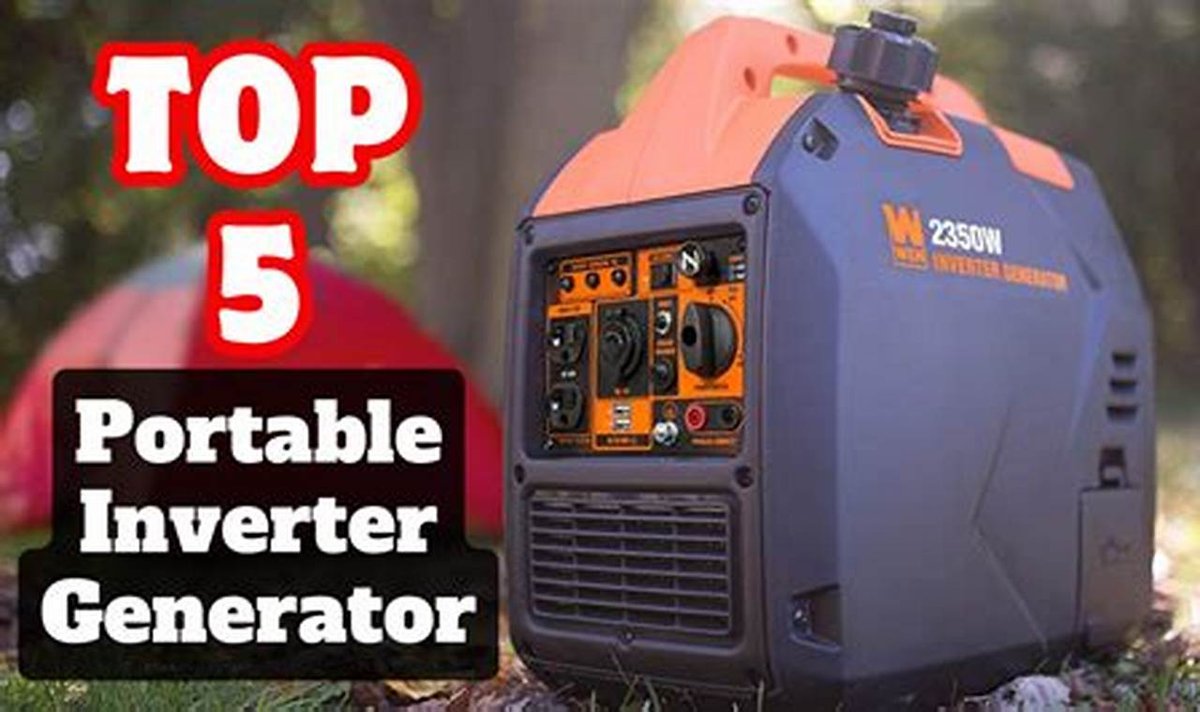
The grid is humming along one moment, and the next? Silence. A sudden storm, a utility failure, or simply a remote campsite trip can plunge you into darkness, halt work, and disrupt the modern conveniences we often take for granted. But it doesn’t have to. With the right portable generator, you can power through outages, run essential tools on a jobsite, or enjoy home comforts off-grid.
Choosing the right portable generator isn't about picking the biggest or cheapest model; it's about understanding your specific power needs and the features that matter most. This isn't just a purchase; it's an investment in convenience, productivity, and peace of mind. Let’s demystify the process, from wattage calculations to crucial safety considerations, so you can make an informed decision with confidence.
At a Glance: Your Portable Generator Checklist
- Size Up Your Needs: List all devices you’ll run simultaneously to calculate total running and starting watts.
- Running vs. Starting: Remember, starting watts (surge power) are typically higher than running watts. Factor in the highest starting wattage of any single appliance.
- Fuel Type: Gasoline is common for portables, but consider propane or dual-fuel for convenience and longer shelf life.
- Inverter Advantage: For sensitive electronics (laptops, phones) or quieter operation, an inverter generator is usually a better choice.
- Safety First: Always operate outdoors, at least 20 feet from your home, and never connect directly to your home's electrical system without a transfer switch.
- Key Features: Look for automatic CO shutoff, low-oil shutoff, and electric start for ease and safety.
Why a Portable Generator? Your Power Lifeline When the Grid Goes Dark
Portable generators are incredibly versatile, acting as a crucial bridge between you and a functioning world when primary power sources fail or aren't available. Unlike whole-home standby generators that are permanently installed, portable units offer flexibility. You can move them from your garage to a campsite, a construction site, or even a tailgating event.
They’re your go-to for powering everything from your refrigerator and microwave during a blackout to essential medical equipment, power tools, or even just keeping your phone charged and the lights on. While whole-home generators provide a seamless, permanent solution, and solar generators offer silent, fume-free power for smaller needs, portable models strike an excellent balance of power, cost, and mobility for most homeowners and outdoor enthusiasts.
A special mention goes to inverter generators, a subset of portables that have gained immense popularity. These units are typically lighter, significantly quieter, and much more fuel-efficient. Crucially, they produce "cleaner" power, making them ideal for sensitive electronics like laptops, smartphones, and certain medical devices, which standard portable generators might damage. If your primary goal involves powering delicate tech or enjoying a quiet outdoor experience, an inverter model is likely your best bet.
The Heart of the Matter: Understanding Wattage and Power Needs
When it comes to portable generators, wattage is king. It dictates how much you can power, so getting this right is crucial. Think of it like deciding how many lanes a highway needs – too few, and you get traffic jams; too many, and you’re overspending on unused capacity.
Running Watts vs. Starting Watts: The Crucial Distinction
This is perhaps the most important concept in generator sizing. Every appliance has two wattage ratings you need to know:
- Running Watts (or Rated Watts): This is the continuous power an appliance needs to operate once it’s already on. For example, a refrigerator might need 600 running watts to keep cooling.
- Starting Watts (or Surge Watts): Many appliances, especially those with motors (like refrigerators, air conditioners, sump pumps, or power tools), require a brief burst of extra power to start up. This surge can be two to three times their running wattage. Once they're running, they drop back to their running watts.
Your generator needs to meet both demands: its total running watts capacity must exceed the sum of all appliances you want to run simultaneously, and its starting watts capacity must be able to handle the single highest starting wattage of any appliance in your mix.
Your Step-by-Step Generator Sizing Worksheet
Don't guess when it comes to wattage. Follow these steps to accurately size your portable generator:
- List Your Essentials: Think about every single device you absolutely must power simultaneously during an outage or at your worksite. Be realistic.
- Find the Running Watts: For each item on your list, locate its running watts. This information is usually on the appliance’s data plate (often a sticker on the back or bottom), in the owner’s manual, or on the manufacturer's website. Sum these up to get your Total Running Watts.
- Identify the Starting Watts: Again, for each item (especially those with motors), find its starting watts.
- Pinpoint the Biggest Starter: Look at your list of starting watts and identify the single appliance with the highest starting wattage.
- Calculate Your Minimum Starting Watts: Add the "highest starting watts" (from step 4) to your "Total Running Watts" (from step 2). This final number is the absolute minimum starting wattage your generator needs to handle.
It's always smart to add a 10-20% buffer to your calculations. You never know when you might need to plug in one more device, and it protects your generator from overload.
Common Device Wattage Estimates
Here’s a quick reference for typical wattage needs, but always check your specific appliance's label for accuracy:
| Appliance | Running Watts (Approx.) | Starting Watts (Approx.) |
|---|---|---|
| Refrigerator/Freezer | 500 - 1,000 | 1,500 - 2,500 |
| Microwave (700-1500W) | 700 - 1,500 | (N/A - no motor) |
| Window AC (10,000 BTU) | 1,000 - 1,500 | 2,000 - 3,500 |
| Sump Pump | 800 - 1,000 | 1,600 - 2,000 |
| Portable Heater | 750 - 1,500 | (N/A - no motor) |
| Coffee Maker | 600 - 1,200 | (N/A - no motor) |
| Television (42-inch) | 200 - 300 | (N/A - no motor) |
| Laptop | 20 - 75 | (N/A - no motor) |
| Well Pump | 750 - 1,000 | 1,500 - 2,500 |
| Electric Dryer | 2,000 - 6,000 | 6,000 - 18,000 |
| Note: Appliances like toasters, coffee makers, and electric heaters generally don't have a starting wattage because they don't have motors. |
General Wattage Tiers: What Can Different Sizes Power?
To give you a broader sense, here's what various portable generator sizes can typically handle:
- 500 – 3,000 Watts: Ideal for recreational use (camping, tailgating), small power tools, a few lights, and charging devices. Think basic essentials.
- 3,100 – 6,000 Watts: Great for powering multiple small appliances, a refrigerator, a few lights, and potentially a window AC unit. Good for temporary home outages or larger RVs.
- 6,100 – 10,000 Watts: Often considered "emergency power" for homes. This range can run critical large appliances like a refrigerator, freezer, well pump, furnace fan, microwave, and several lights. Some models in this range can even handle a smaller electric water heater or a central AC unit (though you'd likely need to manage your load carefully).
For a deeper dive into specific models and their capabilities, you might want to explore some of the top rated portable generators on the market. These models often highlight their running and starting wattages clearly.
Essential Features to Look For in a Portable Generator
Beyond pure power, a generator's features can dramatically impact its usability, safety, and longevity.
Quiet Operation (Decibels Matter)
Generators can be noisy. Traditional portable generators often produce 70-80 decibels (about as loud as a vacuum cleaner or a busy street), while some can reach 90-100 dB (like a lawnmower or motorcycle). If you're using it for camping, tailgating, or even just during an outage where neighbors are close, noise level is a huge factor. Inverter generators excel here, often operating in the 50-60 decibel range (comparable to a normal conversation).
Starting Made Easy: Electric vs. Pull Start
Most smaller portable generators feature a traditional pull-cord start, which can be strenuous, especially in cold weather or for those with limited mobility. Many mid-to-large portable generators offer:
- Electric Start: A simple push of a button (or twist of a key) brings the engine to life, powered by a small onboard battery. This is a game-changer for convenience.
- Remote Start: Some advanced models allow you to start the generator from a distance using a key fob, perfect for those chilly mornings or late nights.
Safety First: Automatic CO Shutoff and Low-Oil Protection
These aren't just conveniences; they're vital safety features:
- Automatic CO Shutoff: Carbon monoxide (CO) is an odorless, colorless, and deadly gas. Many modern generators now include a sensor that automatically shuts down the unit if dangerous CO levels are detected in its operating area. This is a crucial layer of protection.
- Low-Oil Shutoff: Running a generator with insufficient oil can cause severe, irreversible engine damage. This feature automatically turns off the engine when oil levels drop below a safe threshold, protecting your investment.
Fuel Gauge: Know Your Run Time
Simple but effective. A fuel gauge helps you keep track of how much run time you have left, allowing you to plan refueling without the generator unexpectedly sputtering out.
Outlets and Receptacles: The Right Connections
Check the types and number of outlets a generator offers. Most will have standard 120V household outlets, but consider if you need:
- 240V Outlets: For larger appliances or to connect to a transfer switch, typically a 30A or 50A twist-lock receptacle.
- RV Outlets (TT-30R): Essential for RV owners.
- USB Ports: Convenient for charging small electronics directly.
Fueling Your Power: Understanding Portable Generator Fuel Types
Portable generators primarily run on gasoline or propane, with some offering dual-fuel capabilities. Each has its pros and cons.
Gasoline: The Go-To for Portables
- Pros: Readily available at any gas station, high energy density (more power per gallon). Most common for portable generators, making them generally more affordable upfront.
- Cons: Short shelf life (especially without stabilizer), requires careful storage (flammable, emits fumes), and you'll need to transport and store fuel in approved containers. Generators must be cooled before refueling.
- Considerations: During widespread outages, gas stations may be inoperable or run out of fuel.
Propane: Cleaner, Longer Shelf Life
- Pros: Longer shelf life than gasoline (doesn't degrade over time), burns cleaner (less engine wear, fewer emissions), readily available in portable tanks (like those for grills). Safer to store than gasoline.
- Cons: Less energy-dense than gasoline, meaning you'll need more propane to produce the same amount of power, leading to larger or more frequent tank changes. Can be less efficient in very cold weather.
- Considerations: Great for extended outages if you have multiple tanks or a large propane supply.
Dual-Fuel Options: The Best of Both Worlds
Many modern portable generators offer dual-fuel capability, allowing them to run on either gasoline or propane. This provides incredible flexibility, letting you choose the fuel source that's most convenient or available at any given time. It's an excellent feature for preparedness.
While diesel and natural gas generators exist, they are less common for typical portable units. Diesel is more often seen in heavier-duty or industrial portable generators, and natural gas is primarily for whole-home standby systems.
Safety First, Always: Operating Your Portable Generator
Safety is non-negotiable when operating a portable generator. Ignoring guidelines can lead to carbon monoxide poisoning, electrocution, fire, or severe property damage.
The Carbon Monoxide Threat: Placement is Key
This is the most critical safety rule: NEVER operate a generator indoors, in a garage, shed, or any partially enclosed space. Generators produce carbon monoxide (CO), a deadly, odorless, and colorless gas.
- Outdoor Operation Only: Place your generator at least 20 feet away from your home (and any neighboring homes or windows).
- Ventilation: Ensure it’s in an open, well-ventilated area where exhaust fumes cannot accumulate or enter living spaces.
- CO Detectors: Install battery-operated carbon monoxide detectors inside your home and check them regularly.
Connecting Your Generator Safely: The Transfer Switch Imperative
You absolutely must not plug a portable generator directly into a standard wall outlet (this is called "backfeeding"). Backfeeding sends power down utility lines, potentially endangering utility workers and neighbors, and can cause severe damage to your home's electrical system.
The safe and legal way to connect a portable generator to your home's wiring is through a transfer switch, installed by a licensed electrician.
- Manual Transfer Switches: These are common for portable generators. They allow you to safely switch your home's electrical panel from utility power to generator power. You manually select which circuits in your home will receive generator power. This setup ensures that your generator is isolated from the main utility grid.
- Extension Cords: For simple, direct connections (e.g., plugging a refrigerator directly into the generator), use heavy-duty, outdoor-rated extension cords that are properly sized for the appliance's wattage. Never run extension cords under rugs or through windows, and avoid overloading them.
Fueling Safely: Let It Cool Down
Gasoline generators become very hot during operation. Always allow the generator to cool down completely before attempting to refuel it. Spilled gasoline on a hot engine can ignite, causing a fire or explosion. Store fuel in approved containers away from living areas and direct sunlight.
Weather Protection: Keep it Dry
Never operate a generator in rain or snow unless it is protected by a dedicated, open-sided generator tent or enclosure that provides ample ventilation. Electrical components and water do not mix.
Load Management: Don't Overload
Always ensure your generator's wattage rating can handle the combined load of your connected appliances. Overloading can damage the generator and potentially the appliances, and can also create a fire hazard. If you're frequently tripping the generator's circuit breaker, you're likely overloading it.
The Cost of Power: What to Expect
The price of portable generators varies widely based on wattage, features, and brand.
- Smaller Inverter Generators (1,000-3,000 watts): Often range from $400 to $1,200. These are excellent for camping, tailgating, and powering a few essential devices.
- Mid-Range Portable Generators (3,000-6,000 watts): Typically cost between $600 and $1,800. This is a sweet spot for many homeowners seeking backup power for essential appliances.
- Larger Portable Generators (6,000-10,000+ watts): Can range from $1,000 to over $2,500. These powerful units are designed for more extensive home backup.
Remember that the upfront cost of the generator is just one part of the equation. Factor in the cost of fuel, proper storage, safety accessories (like carbon monoxide detectors), and potentially a transfer switch installation by a licensed electrician, which can add several hundred to over a thousand dollars depending on complexity. While an added expense, the transfer switch is a critical investment in safety and convenience.
Making Your Final Choice: A Recap and Next Steps
Choosing the right portable generator involves a careful balance of power, features, and safety. You've walked through the crucial steps of calculating wattage, understanding essential features like automatic CO shutoff and electric start, and weighing your fuel options. You’ve also gained critical insights into safe operation and installation with a transfer switch.
Before you make your final decision, consider:
- Your Primary Use: Is it for occasional backup power, regular jobsite use, or recreational activities? This will heavily influence your wattage and feature needs.
- Noise Tolerance: If quiet operation is paramount, an inverter generator is the clear winner.
- Maintenance: All generators require regular maintenance (oil changes, spark plug checks, fuel stabilizer for gasoline). Factor this into your ownership.
- Storage: Where will you store your generator and its fuel safely when not in use?
Investing in a portable generator is investing in reliability when you need it most. Do your research, read user reviews, and don't hesitate to consult with experts or electricians for installation specifics. With this guide, you're well-equipped to find the perfect power partner to keep your life running smoothly, no matter what comes your way. For even more detailed comparisons and options, check out our guide to the top rated portable generators available today.