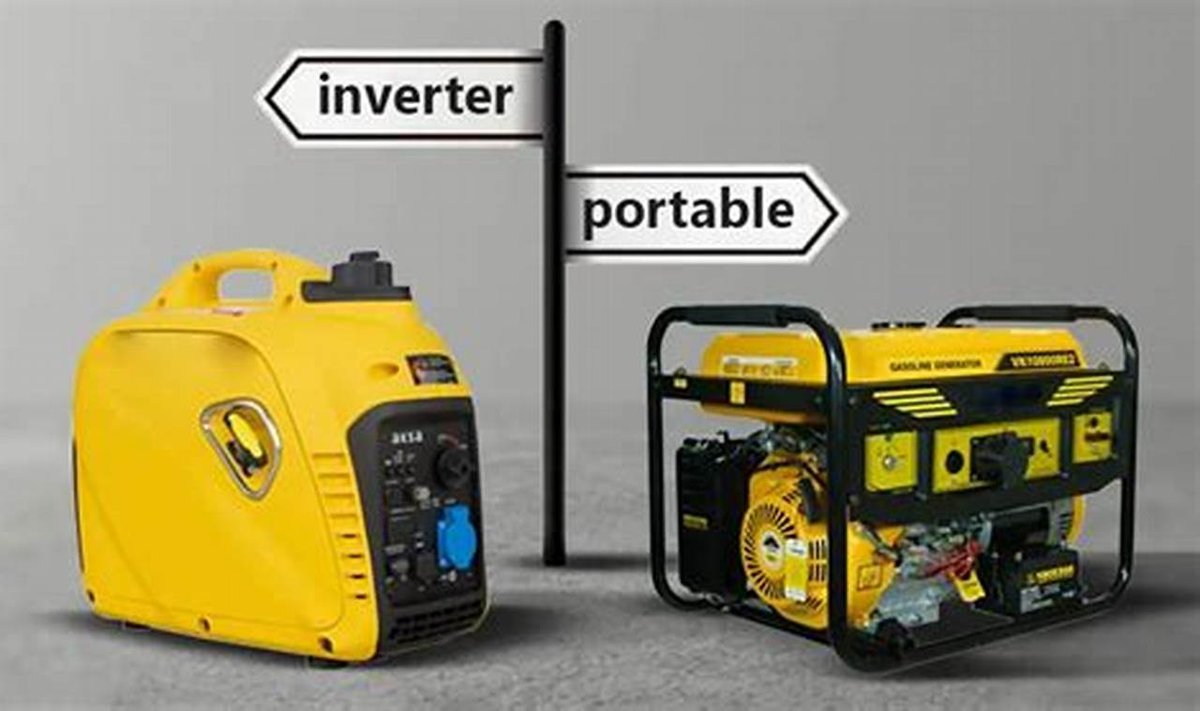
When the lights go out, whether it's a sudden summer storm or a planned grid shutdown, having a reliable backup power source isn't just a convenience—it's peace of mind. Navigating the world of generators can feel overwhelming, but understanding the Types of Portable Generators: Inverter, Conventional & Fuel Options is key to making an informed decision that keeps your essential systems running. We're here to cut through the jargon and help you choose the right portable powerhouse for your needs.
From powering critical medical devices during an emergency to keeping your fridge cold, or simply illuminating a campsite, portable generators offer a versatile solution. Let's explore the differences in how they generate power and what fuels them, so you can confidently pick the perfect fit.
At a Glance: Your Portable Generator Cheat Sheet
- Conventional Generators: Robust, powerful, and budget-friendly for heavy-duty tools or non-sensitive appliances. They're typically louder and less fuel-efficient.
- Inverter Generators: Quieter, more fuel-efficient, and produce "cleaner" power, making them safe for sensitive electronics like laptops and phones. They're generally more expensive and have lower power output.
- Fuel Flexibility: Options range from ubiquitous gasoline and long-lasting propane to efficient diesel, and even eco-friendly solar. Dual-fuel models offer extra versatility.
- Power Needs First: Always calculate the wattage of your essential items before buying. Overestimating is better than underestimating.
- Portability vs. Power: Portable units sacrifice some raw power for mobility, ideal for temporary needs, RVs, or campsites, and are more affordable than permanent standby units.
The Heart of the Matter: Conventional vs. Inverter Generators
The most fundamental distinction in portable generators lies in their technology: conventional versus inverter. This choice impacts everything from the quality of power your devices receive to the noise level and fuel efficiency.
Conventional Portable Generators: The Workhorse
Conventional portable generators are what most people picture: a rugged, often yellow or red, machine with an exposed engine. They use an alternator to directly produce AC power, which is then regulated to a standard 120V (and sometimes 240V) output.
What They're Good For:
- Raw Power: They excel at delivering high wattage to power larger appliances, power tools, or well pumps.
- Cost-Effective: Generally, they have a lower upfront cost per watt compared to inverter models.
- Durability: Built tough for job sites and heavy-duty use.
The Downsides: - Noise: They can be quite loud, which might be an issue for neighbors or campsites.
- "Dirty" Power: The power output can have voltage fluctuations, making it unsuitable for sensitive electronics like computers, smartphones, or modern smart appliances.
- Fuel Inefficiency: They often run at a constant engine speed regardless of the load, leading to higher fuel consumption.
If you primarily need to power construction tools, a well pump, or a refrigerator without worrying about delicate electronics, a conventional generator offers reliable, no-frills power.
Inverter Portable Generators: The Quiet, Smart Solution
Inverter generators represent a significant leap in generator technology. They don't just produce AC power directly. Instead, they convert high-frequency AC current to DC, then use a sophisticated inverter to convert it back to stable AC power. This multi-step process results in what's known as "clean power."
What "Clean Power" Means:
The output from an inverter generator has a pure sine wave, meaning the electricity flows smoothly and consistently without the spikes or dips found in conventional models. This stable power is crucial for safely operating sensitive electronics, preventing damage and ensuring optimal performance.
What They're Good For:
- Sensitive Electronics: Absolutely essential for charging phones, laptops, tablets, medical equipment, and powering smart TVs or gaming consoles.
- Quiet Operation: They're significantly quieter than conventional generators, often employing special mufflers and enclosed designs. Their engines also adjust speed based on demand, reducing noise when less power is needed.
- Fuel Efficiency: Because the engine speed throttles up or down according to the load, inverter generators consume less fuel, leading to longer run times and cost savings.
- Portability: Many inverter generators are designed to be compact and lightweight, making them easy to transport for camping, tailgating, or RV trips.
- Parallel Capability: Many models can be linked together (paralleled) with a second identical inverter generator to double your power output without buying a much larger, heavier unit.
The Downsides: - Higher Cost: Their advanced technology comes with a higher price tag per watt.
- Lower Max Output: While you can parallel them, a single inverter generator typically has a lower maximum power output than a similarly sized conventional generator.
For camping, RVing, or home backup where you prioritize quiet operation and need to protect your valuable electronics, an inverter generator is the clear winner. You can explore Our top rated portable generators to see some leading inverter models.
Quick Comparison: Conventional vs. Inverter
| Feature | Conventional Portable Generator | Inverter Portable Generator |
|---|---|---|
| Power Quality | "Dirty" power; voltage fluctuations | "Clean" sine wave; stable and safe for electronics |
| Noise Level | Loud | Quiet (often with variable engine speed) |
| Fuel Efficiency | Less efficient; constant engine speed | More efficient; engine speed adjusts to demand |
| Cost (per watt) | Lower upfront cost | Higher upfront cost |
| Portability | Heavier, bulkier | Often lighter, more compact |
| Best For | Heavy tools, non-sensitive appliances, budget-focus | Sensitive electronics, camping, RVs, quiet operation |
| Parallel Capability | Rare | Common for doubling output |
Beyond the Basics: Other Generator Types
While our focus is portable, it's worth briefly touching on other types to understand the broader landscape.
- Standby Generators: These are robust, semi-permanent units that connect directly to your home's electrical system and automatically kick in when the power goes out. They're much larger and more expensive than portable units but offer whole-home power and unmatched convenience. They are a different class entirely, built for long-term, hands-off operation.
- Solar Generators: These aren't generators in the traditional sense, but rather battery banks charged by solar panels. They're ideal for silent, emission-free power for small devices, lighting, and short-term needs, especially for camping or off-grid living. Their main limitation is power output and reliance on sunlight, though many can also be charged via a wall outlet.
- Hydrogen Generators: A new and emerging technology, hydrogen generators use fuel cells to convert hydrogen gas into electricity. They're highly efficient, quiet, and produce zero emissions. However, they are currently very expensive and difficult to find in the consumer market.
- Biodiesel Generators: These are a more eco-friendly alternative to traditional diesel generators, using a blend of diesel and renewable components like vegetable oil. They reduce harmful emissions but can be less reliable during extended outages if specialized fuel isn't readily available.
Fueling Your Power: A Deep Dive into Options
Once you've decided between conventional and inverter, the next major consideration is fuel type. Each fuel option has its own set of advantages and disadvantages regarding cost, availability, storage, and performance.
1. Gasoline Generators: The Ubiquitous Choice
Gasoline generators are the most common type of portable generator. They are widely available, and gasoline is easy to find at almost any gas station.
Pros:
- Low Initial Cost: Often the most affordable option upfront.
- Easy to Find Fuel: Gasoline is readily accessible.
- High Power Output: Often deliver strong power for their size.
Cons: - Storage Issues: Gasoline has a relatively short shelf life (3-6 months, even with stabilizers) and can be dangerous to store in large quantities due to flammability.
- Emissions: Produces higher emissions compared to propane or natural gas.
- Noise: Tends to be louder than other fuel types, especially in conventional models.
- Fuel Consumption: Can be less fuel-efficient than diesel or propane over time.
- Refueling During Outages: Requires you to venture out to get fuel during an outage, which might be difficult or impossible.
Ideal Use: Good for infrequent, short-term outages, camping, or powering tools on a job site where gasoline access is easy.
2. Propane Generators: The Clean, Storable Alternative
Propane (LPG) generators are an increasingly popular choice, particularly for home backup. Propane is stored in tanks, similar to what you'd use for a BBQ grill, or larger tanks for longer run times.
Pros:
- Clean-Burning: Produces fewer emissions than gasoline, leading to less carbon buildup in the engine and longer engine life.
- Long Shelf Life: Propane can be stored indefinitely without degrading, unlike gasoline.
- Easy Storage: Propane tanks are safe and easy to store outdoors.
- Cold Weather Performance: Performs well in cold temperatures, unlike diesel which can gel.
- Accessibility: Tanks are exchangeable or refillable at many hardware stores and gas stations.
Cons: - Lower Efficiency: Propane typically burns faster than diesel and can sometimes cost more than natural gas.
- Tank Management: You need to have sufficient propane tanks on hand and manage their refills.
- Lower Power Output: Sometimes slightly lower power output compared to a gasoline generator of similar size.
Ideal Use: Excellent for home backup, RVs, and situations where you need to store fuel long-term without degradation.
3. Diesel Generators: The Powerhouse for Heavy Duty
Diesel generators are known for their robustness, fuel efficiency, and long lifespan. While often seen in industrial or standby applications, portable diesel generators are available and favored for heavy-duty, long-term power needs.
Pros:
- Fuel Efficiency: Diesel engines are highly fuel-efficient, meaning longer run times per gallon.
- Durability & Longevity: Built for continuous operation, diesel engines tend to last longer.
- High Power Output: Excellent for running large appliances, farms, or businesses.
- Cold Weather Operation: Can operate in freezing temperatures with winter-grade diesel fuel, preventing gelling.
Cons: - Noise: Can be quite loud, though newer models have improved.
- Emissions: Produces more harmful emissions (soot and nitrogen oxides) than gasoline, propane, or natural gas.
- Higher Upfront Cost: Generally more expensive to purchase than gasoline or propane models.
- Cold Weather Gelling: Standard diesel fuel can gel in extreme cold without additives or winter blend.
Ideal Use: Heavy-duty applications, construction sites, farms, large homes, or extended power outages where efficiency and durability are paramount.
4. Natural Gas Generators: The "Unlimited" Fuel Source (Mostly Standby)
Natural gas generators are primarily found as large standby units due to their direct connection to a home's gas line. However, some portable models exist, offering the benefit of seemingly endless fuel during an outage.
Pros:
- Continuous Fuel Supply: If your home has a natural gas line, you have an uninterrupted fuel source, eliminating the need for refueling.
- Clean Emissions: Produces significantly lower emissions than diesel or gasoline.
- Cost-Effective Fuel: Natural gas is often cheaper than gasoline or propane.
Cons: - Installation Cost: Connecting a portable unit to a home gas line requires professional installation and specific fittings.
- Vulnerability: Your natural gas supply can be interrupted during a major disaster or extreme cold (though less common than electricity outages).
- Lower BTU Output: Natural gas has a lower energy density than gasoline or propane, potentially leading to slightly less power output for a given engine size.
- Not Truly Portable: While the unit itself might be portable, its reliance on a natural gas line limits its mobility during operation.
Ideal Use: Primarily for standby home backup where a continuous fuel source is desired and the natural gas line remains operational.
5. Dual-Fuel and Tri-Fuel Generators: The Best of Both Worlds
Many portable generators today offer the flexibility of running on multiple fuel types, most commonly gasoline and propane (dual-fuel), and sometimes natural gas as well (tri-fuel).
Pros:
- Flexibility: You're not reliant on a single fuel source. If gasoline isn't available, you can use propane, and vice-versa.
- Extended Run Times: By switching between fuels, you can significantly extend your power duration during prolonged outages.
- Fuel Storage Benefits: Combine the long shelf life of propane with the ready availability of gasoline.
Cons: - Slightly Higher Cost: Dual-fuel models typically cost a bit more than single-fuel equivalents.
- Managing Two Fuels: Requires managing and storing two different fuel types.
- Power Output Differences: The wattage output can vary slightly depending on which fuel is being used (often slightly lower on propane).
Ideal Use: Anyone seeking maximum flexibility and reliability during an outage, or who wants to use propane for clean burning and then switch to gasoline if propane runs out.
Making the Smart Choice: Key Considerations for Your Portable Generator
Choosing the right portable generator involves more than just picking a fuel type. You need to align its capabilities with your specific needs.
1. Prioritize Power Needs: What Must Run?
This is perhaps the most crucial step. Don't guess. List all the essential items you want to power during an outage (lights, refrigerator, furnace fan, medical equipment, phone chargers, etc.).
- Determine Running Watts: This is the continuous power an appliance needs.
- Determine Starting Watts (Surge Watts): Many appliances, especially those with motors (refrigerators, AC units, power tools), require a momentary burst of extra power to start. This can be 2-3 times their running wattage. Your generator must be able to handle this surge.
Calculation Tip: Add up the running watts of all items you plan to operate simultaneously. Then, identify the appliance with the highest starting wattage and add that difference to your total running watts (e.g., if total running watts are 3000W, and your fridge has a starting watt of 1500W but only needs 600W running, your peak need is 3000W + (1500W - 600W) = 3900W). Always add a 10-20% buffer.
2. Noise Level: How Quiet Do You Need It?
Generator noise is measured in decibels (dB). For comparison:
- 50-60 dB: Normal conversation, quiet air conditioner (common for inverter generators).
- 65-75 dB: Vacuum cleaner, busy street (common for conventional generators).
- 80+ dB: Blender, garbage disposal (some very powerful conventional units).
If you're using it in a campground, close to neighbors, or simply value peace and quiet, an inverter generator is your best bet.
3. Portability & Size: Where Will You Use and Store It?
- Weight & Dimensions: If you plan to move it frequently (camping, RVing), lighter, more compact inverter models are better. Consider units with wheels and collapsible handles.
- Storage Space: Ensure you have adequate, safe storage in a garage, shed, or dedicated outdoor space. Remember, generators must never be operated indoors.
4. Fuel Efficiency & Run Time: How Long Will It Last?
Consider how long you expect to need power.
- Fuel Tank Size: A larger tank generally means longer run times between refueling.
- Engine Efficiency: Inverter generators are often more fuel-efficient due to their variable throttle.
- Fuel Availability: How easy is it to get more of your chosen fuel during an outage?
5. Budget & Lifespan: An Investment in Reliability
- Upfront Cost: Conventional generators are typically cheaper than inverter models. Dual-fuel and diesel units also have higher price points.
- Long-Term Value: Consider fuel costs, maintenance, and expected lifespan. A more expensive, fuel-efficient diesel or inverter generator might save you money in the long run.
- Maintenance: All generators require regular maintenance (oil changes, spark plug checks, air filter cleaning). Factor this into your decision.
6. Safety Features: Don't Compromise
Look for essential safety features:
- CO Sensor: Automatically shuts down the generator if carbon monoxide levels become dangerous.
- Low-Oil Shutoff: Protects the engine from damage by turning it off if oil levels are too low.
- Circuit Breakers: Prevents overloading the generator and damaging connected devices.
- GFCI Outlets: Protects against electrical shock.
Actionable Insights for Selecting Your Generator
To truly nail down your ideal portable generator, follow these steps:
- Prioritize Your Power Needs: Start by making a non-negotiable list of what absolutely must run. Will it be just basic lights and phone charging (low wattage), or will you need to power a refrigerator, a few lights, and a fan (mid-range wattage)? For larger needs, consider parallel kits for inverter generators or larger conventional units.
- Evaluate Fuel Availability: What fuel source is most reliable and cost-effective in your area during an emergency? Do you have easy access to a natural gas line? Can you safely store propane tanks? Is gasoline always readily available? This often points people towards dual-fuel options for flexibility.
- Assess Maintenance & Ease of Use: Are you comfortable with manual setup, starting, and refueling, or do you prefer something with simpler operation? Portable units are inherently more "hands-on" than standby generators, but some are easier to start and maintain than others.
- Balance Budget & Lifespan: Don't just look at the sticker price. A cheaper gasoline model might cost more in fuel over its lifetime and potentially need replacing sooner than a more durable, efficient diesel unit. Invest in quality if your needs are critical or frequent.
Common Questions About Portable Generators
What's "clean power" and why do I need it?
"Clean power" refers to electricity with a stable, pure sine wave output, free from voltage spikes or fluctuations. Inverter generators produce this. You need it to safely power sensitive electronics like smartphones, laptops, TVs, gaming consoles, and modern appliances with microprocessors. Without clean power, these devices can be damaged, experience glitches, or simply refuse to work.
Can I run a portable generator indoors?
Absolutely not. Portable generators produce carbon monoxide, an odorless, colorless, and deadly gas. Operating a generator indoors, even in a garage with the door open, can lead to fatal carbon monoxide poisoning. Always operate generators outdoors, at least 20 feet away from any windows, doors, or vents, and ensure the exhaust is directed away from occupied buildings. Many modern generators include CO sensors that shut the unit down if dangerous levels are detected.
How much power do I really need?
The best way to determine this is to list every appliance you want to run simultaneously, find its "running watts" and its highest "starting watts" (if it has a motor), and then add them up. Most appliances have this information on a label. Always round up and add a safety buffer (10-20%) to prevent overloading your generator. A common mistake is underestimating the starting wattage of motor-driven appliances.
Are solar generators truly sufficient for home backup?
For small electronics, lights, and charging devices, portable solar generators are excellent, silent, and emission-free. However, for powering large appliances like refrigerators, furnaces, or entire homes, most portable solar generators (which are essentially battery banks charged by solar) have limited capacity and output. Whole-home solar systems with extensive panels and battery storage are a different, much larger, and more expensive proposition, requiring professional installation. For significant home backup, a fuel-powered generator remains the most practical and powerful choice.
What's the best way to store fuel for my generator?
Always follow local regulations for fuel storage. Gasoline should be stored in approved, sealed containers in a cool, well-ventilated area, away from ignition sources. Use a fuel stabilizer to extend its shelf life. Propane tanks should always be stored outdoors, in an upright position, away from direct sunlight and heat sources. Diesel fuel also has a good shelf life but should be stored in opaque, sealed containers.
Powering Forward with Confidence
Choosing the right portable generator involves a careful balance of power needs, fuel preference, noise tolerance, and budget. Whether you opt for the raw power of a conventional model, the quiet efficiency of an inverter, or the flexibility of a dual-fuel system, understanding these core distinctions empowers you to make a decision that keeps your life running smoothly, even when the grid doesn't cooperate. Do your homework, prioritize safety, and enjoy the peace of mind that comes with reliable backup power.